
How AI search is rewriting product discovery for DTC brands (and what to do now)

Here's a strange thought: your next customer might never see your homepage.
More and more, shopping starts with a question typed into ChatGPT, Gemini or Google's AI, and ends with whatever those tools suggest. In the UK, 61% of consumers say they already use AI when they shop. For years the goal was climbing the search rankings. Now there's a new one sitting alongside it: being one of the brands the AI mentions.
Google's AI Mode is already live in the UK, shaping what people buy. So it's worth understanding what's shifting, why it matters, and a few small moves you can make this week.
Why it's a bigger deal than it looks
The interesting part is the quality of this traffic. Visitors who arrive from AI tools tend to be worth around 4.4 times more than your average organic visitor, and they convert at roughly three times the rate of other channels, going by recent industry analysis. It's a small slice of your traffic for now, but it's growing steadily.
The thing to keep in mind is that AI doesn't give you ten blue links to browse. It gives one answer and a short list of names. If you're not on that list, you're easy for that shopper to miss, and there isn't really a page two to catch you.
GEO is the new SEO (and yes, it's a real thing now)
If SEO was about ranking your page, GEO, generative engine optimisation, is about getting your products mentioned inside the AI's answer.
The models build that answer from your product data, your reviews and whatever the wider internet says about you, then decide who to recommend. So the aim is a simple one: to be among the easiest and most trustworthy brands for them to point to.
The playbook: what tends to work
The reassuring bit is that none of this is complicated. Most of it is just the basics, done properly.
- Lead with the useful stuff. AI pays far more attention to the top of a page than the bottom, and roughly 44% of ChatGPT citations come from the first 30% of a page. So it helps to open with what the product is for, what it's made of, who it suits and the key specs, in plain language, before the brand story.
- Add product schema. Marking up your price, availability, ratings, GTIN and brand gives the model clean facts it can trust, rather than marketing copy it has to interpret.
- Lay things out in tables. Specs and features in a simple comparison table get picked up far more often than the same detail tucked into paragraphs. AI finds a table easy to read, so they're well worth using.
- Let your reviews speak in words. A model can't reliably read a row of gold stars, but it reads a quoted review easily. Adding a few genuine customer quotes to the page tends to help you get mentioned more often.
- Write the buying guides. Pieces like "best X for Y" and "how to choose" are what win the broader research questions. If you write them and link back to the products they mention, you make it easy for the AI to connect the two.
- Get mentioned in other places. AI tends to cross-check you across reviews, marketplaces, roundups and forums before recommending you. The more places that talk about you well, the more confident it feels putting you forward.
- Keep your data fresh. Old prices and stale review counts can quietly date you, so updating regularly helps. The crawlers lean towards data that looks current.
A quick UK reality check
The discovery side of this has already arrived here. AI Mode is live in the UK and plenty of people use it day to day. The buy-inside-the-chat features, like agentic checkout, are rolling out in the US first, with the UK to follow.
That's actually good news, because it gives you a head start. You've got time to get your product data and content into shape while a lot of brands haven't turned their attention to it yet.
A gentle place to start this week
There's no need to overhaul everything at once. You could simply pick one product line, front-load the page, add the schema, add three real review quotes, and write one proper buying guide around it.
We dig into shifts like this every week, so if it's useful, you can get the news, insights and tactics worth your time straight to your inbox if you subscribe to our newsletter.
Hear founders talk it through on the DTC Live On Air podcast, and compare notes with brands already testing it in our community.
If you'd like more, there's the DTC brand news that mattered this quarter and what the first half of 2026 taught DTC brands, and you can meet founders working through all of it in person at our events.
Search really is being rewritten as we speak. The brands that treat their product data as a proper storefront, rather than an afterthought, are the ones AI will be glad to recommend, and there's no reason that can't be you.
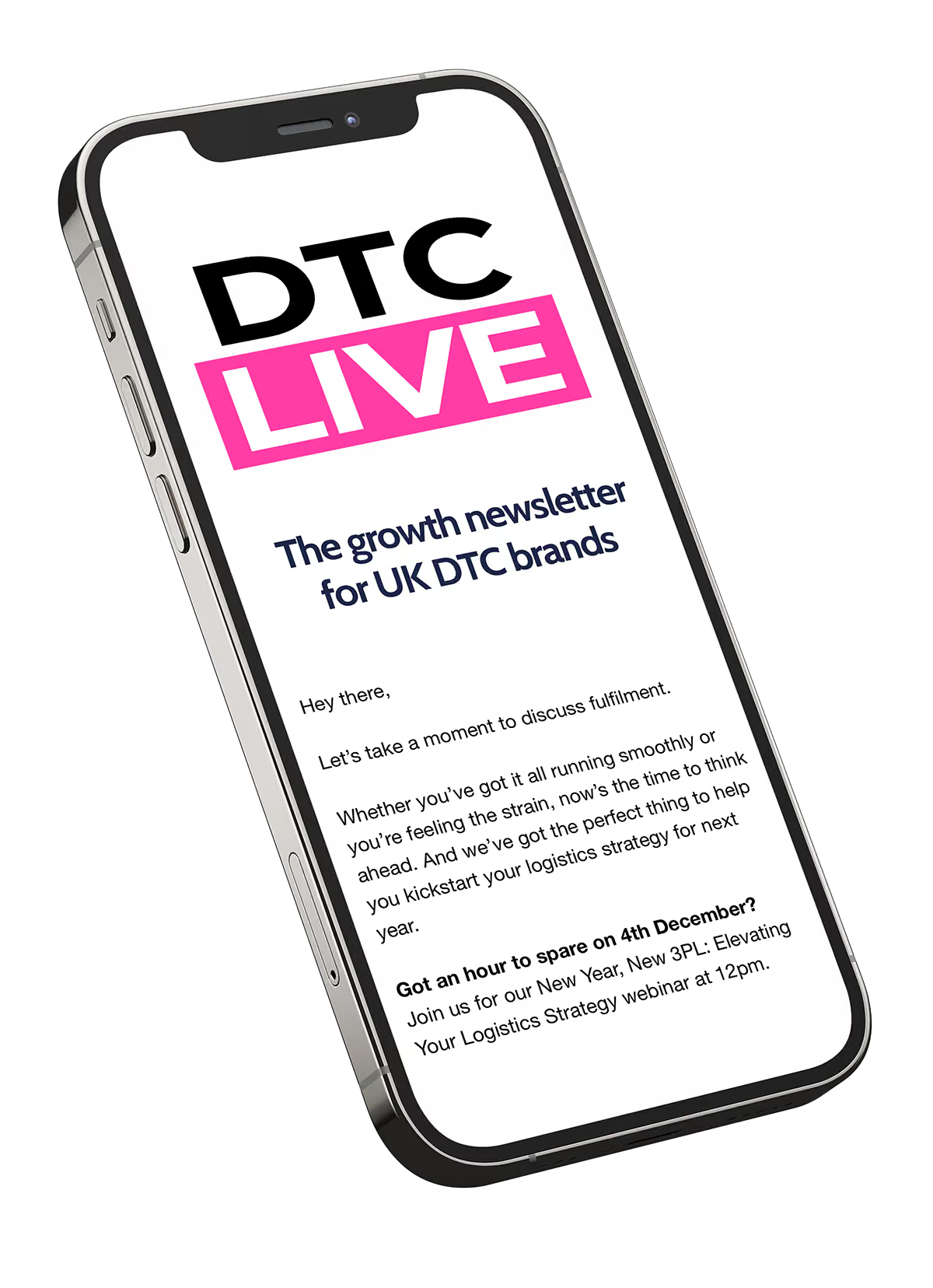
The DTC Live Newsletter
Subscribe to get weekly eCom insights straight to your inbox.