How Seb Skincare Built a Profitable Niche Brand From a Kitchen
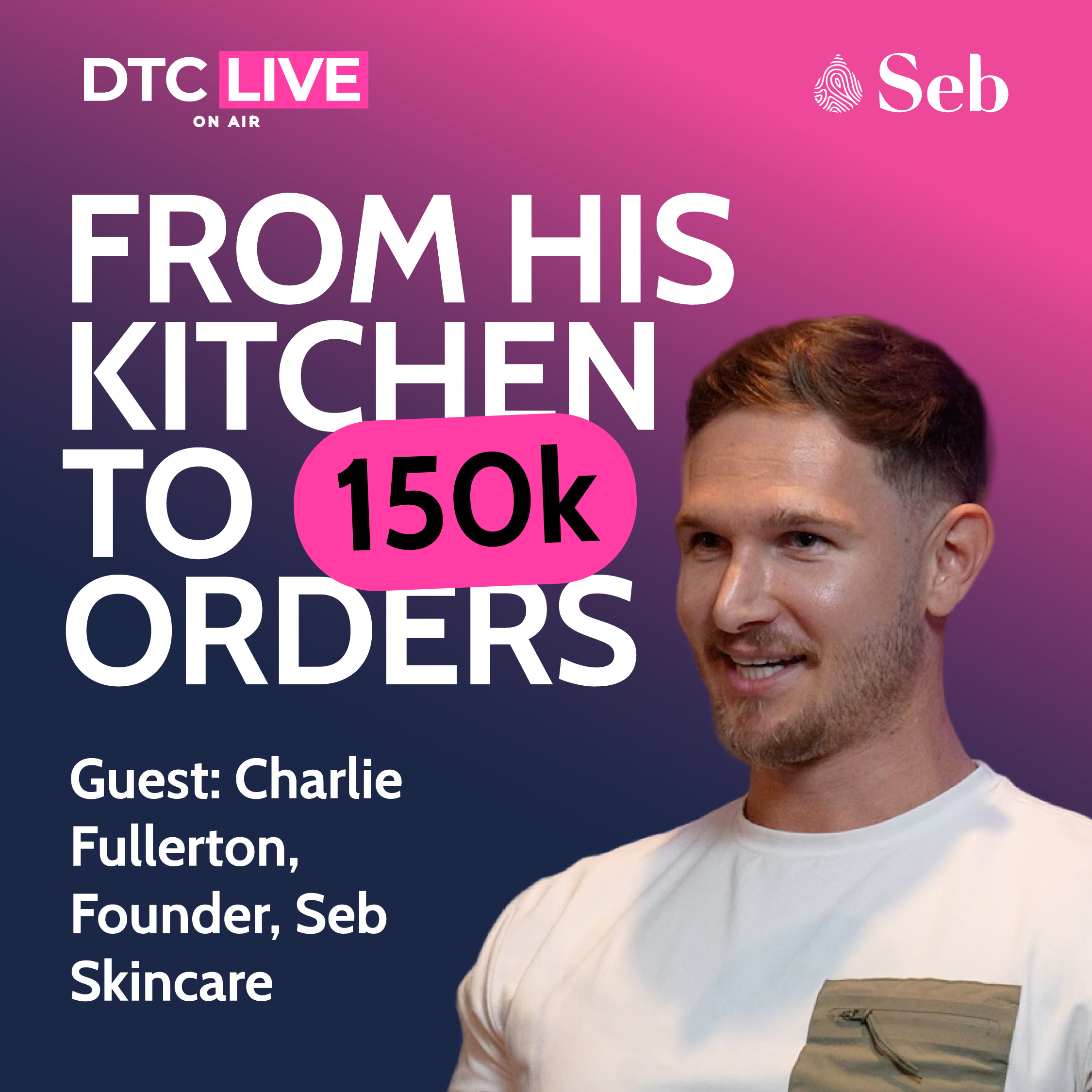
Charlie Fitton knew nothing about skincare. By his own admission, he was the guy who used a bar of soap on his hair, face, everything. Then he got seborrheic dermatitis, couldn't find a product he trusted, and ended up making one in his kitchen.
That brand is Seb Skincare, and on the latest episode of DTC Live On Air, Charlie is refreshingly open about how he turned a personal problem into a profitable, trusted business, mistakes and all.
The full story is better from him, so go watch the podcast on YouTube.
Here are some things from his strategy worth knowing right now:
1. Pick one niche and go deep
Most skincare brands try to treat everything. Charlie did the opposite.
There are seven types of eczema. Seb went all-in on one, seborrheic dermatitis, to the point the brand name is built around it. The aim was for people to hear "seb derm" and think of Seb.
"Really get to know the audience in depth before you start anything."
Two products, one niche, deliberately kept that way until it was full. He's only expanding the range now, and only because customers are asking, "not for the sake of it."
2. Get close to the people with the problem
Charlie's first marketing was about as un-scalable as it gets: printed posters with QR codes, stuck up around his local area, and hours in Reddit and Facebook groups offering the product to people with the condition.
He got kicked out of a few for spamming. But being immersed with people who actually had the problem taught him more than any research deck could.
"If I've got this problem, there must be other people out there."
That's the real lesson. He didn't guess at product-market fit. He went and sat with the exact people he wanted to help.
3. In skincare, trust is the whole game
Skincare and beauty are brutally hard to sell online, because the customer has usually been let down before. Charlie's answer is to remove the risk and prove it works.
His conversion non-negotiables are simple:
- A money-back guarantee. Scary when every bottle is precious, but it signals you're trying to help, not just take money. His own dad asked what happens if everyone demands a refund. They don't.
- Before-and-after photos. Hard to get early, worth everything later. He incentivises them, but says most people share willingly because they're so happy with the result.
- Reviews, front and centre. The first thing anyone checks.
- An AI chatbot on site. It answers the repetitive, sceptical questions at any scale, "like ChatGPT, but on your site," tailored to the niche.
He also educates heavily on-site, so by the time someone buys, they understand their own condition.
Watch the full podcast on YouTube
4. Keep it small enough to actually run
For a long stretch, Seb was made on a kitchen table with one bottling machine and one labelling machine.
When the ads scaled, operations buckled. Charlie ran "Seb Sundays," roping in aunties and cousins to bottle and label by hand, and admits he spent months just keeping his head above water.
His takeaway: a low SKU count was a blessing for a solo founder. If he did it again, he'd start with one product, not two. Growth is only worth chasing if you can physically deliver it.
What else is in the episode
A taste of what else Charlie gets into:
- [02:40] The failed jiu-jitsu brand still sitting in his loft, and the knowledge gap that killed it.
- [11:20] The AI ad that backfired when everyone called it out, and what he learned.
- [13:00] The Claude script-writing skill he built to spin up on-brand, compliant ad scripts per persona.
- [24:55] Handing the reins to an agency after building the whole thing himself, and what changed.
- [27:10] The retention surprise from a founder who doesn't even open his own emails.
The takeaway
You don't need a product background to build a brand people trust. You need a real problem you understand better than anyone, a niche narrow enough to own, and the honesty to earn trust before you ask for the sale.
Watch the full episode
Charlie goes deep on all of it, the highs, the stress and the kitchen chaos.
Connect is back in 2027
Bigger, and in more cities. Subscribe to the newsletter to be first to hear dates and tickets, or see what's already in the diary on our events calendar.
Keep learning with us
- Trade notes with other founders in our community.
- More honest founder stories: what By Babes' founder learned the hard way and how Valentte scaled 50x with no investors.
The DTC Live Newsletter
Subscribe to get weekly eCom insights straight to your inbox.