How Valentte Scaled 50x in 5 Years With No Investors
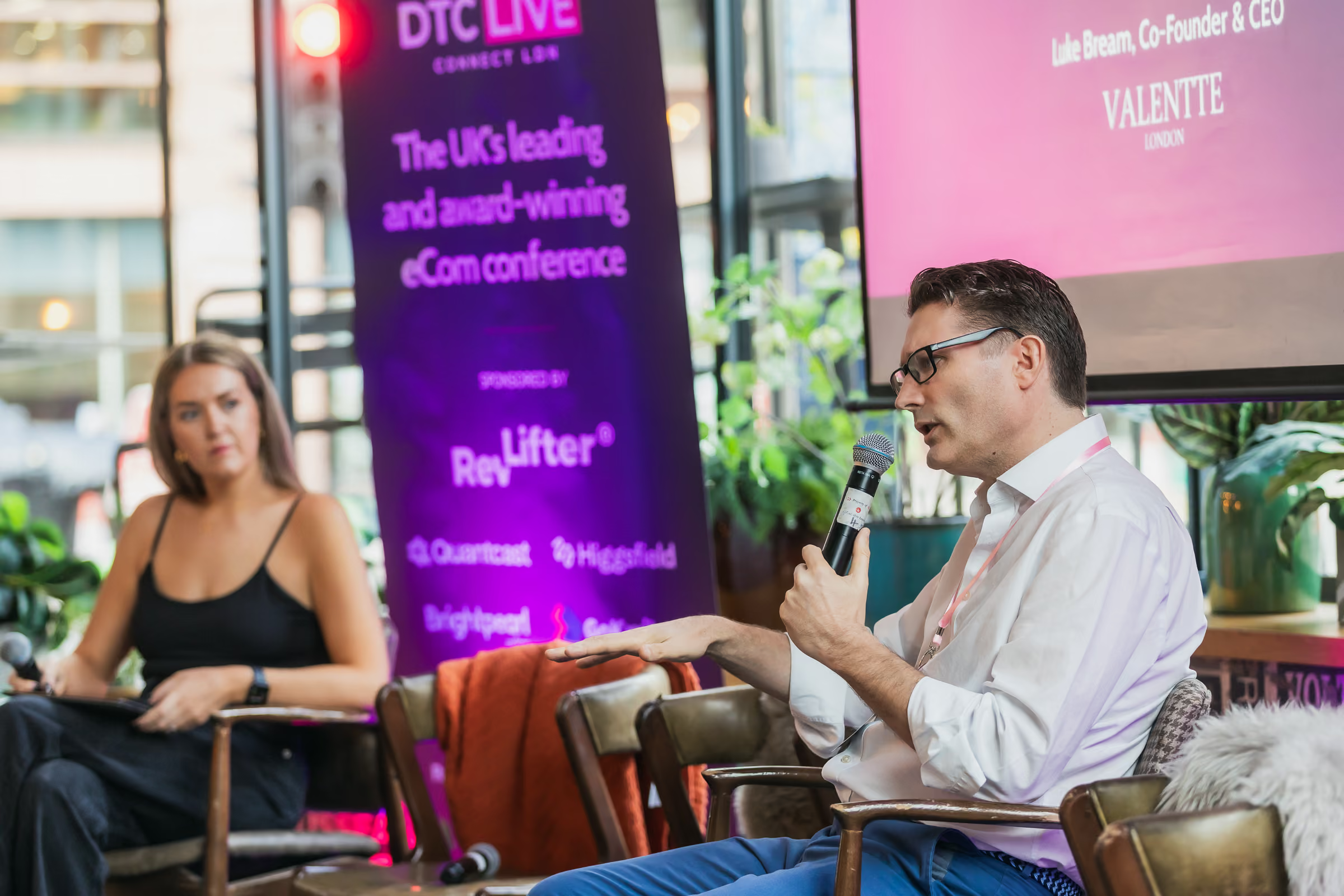
Valentte grew 50x in five years with no investors and no outside money. Last year, near the top of that growth, it also lost £2.5 million.
Both are true, and Valentte's founder Luke said so out loud on the Connect LDN stage. It turned into one of the most honest, useful talks of the day: the full arc from market stall to millions, and the very expensive lessons in the middle.
Here's what he shared, and what you can take from it.
Also watch the full panel on YouTube
From a market stall to a million in ad spend
Valentte makes home fragrance, candles and reed diffusers, and is now one of the UK's biggest manufacturers. It did not start that way.
Luke launched on a stall at Greenwich Market in 2011. For nine years it stayed tiny: five staff, county shows, RHS flower shows up and down the country. Then COVID cancelled every show at once.
So he took the £50,000 bounceback loan and put it into Facebook ads. Week one was £1,000. By the end of that first year he'd spent just under a million, and the business was never the same.
Growth happens in steps, and every step breaks something
Luke's headline lesson: growth isn't a smooth line. It jumps in steps, and every time the business steps up, something snaps.
"Each time your business steps up, something breaks."
Sometimes it's your systems, sometimes it's your operations, sometimes it's you. His advice is to pause at each new level and go looking for the break before you push for the next one. Because it's there whether you've spotted it or not.
The £200k-a-week win that nearly broke the business
Here's the story that made the room go quiet. Luke read Alex Hormozi's $100M Offers, handed it to his team, and asked them to build one. They launched it the day before the British Grand Prix, straight to a basic product page, no landing page.
Overnight, sales rose by £200,000 a week. And stayed there.
It sounds like a dream. It nearly took the business down. The dominoes fell in order: fulfilment first (the order queue went from around 500 to over 10,000), then customer service a week later (from about 50 tickets to 1,200), then the 90 staff he hired overnight overwhelmed his own managers. His unit labour cost, normally about 35p, climbed past £1.30 as stock ran out and the team went back to hand-filling.
"Just because I can grow, it doesn't mean I necessarily should at this exact moment."
The lesson he kept coming back to: the very traits that let you build a business, drive, confidence, a bias to action, become the thing that hurts you at scale. Put the ego down and ask if the ground under you is actually solid before you climb again.
Know your numbers daily, not monthly
If there's one habit to steal, it's this. Valentte calculates profitability every single day, with a simple red/green traffic-light system so a bad day is obvious at a glance.
"If your accountant is doing management accounts for you once a month, that is not going to cut it."
When you're spending six figures a month on ads, a monthly look back is far too slow to catch a problem that's costing you daily.
Blended metrics hide where you're bleeding
Luke's sharpest practical point was about CAC. Blend new and returning customers into one number, and you'll fool yourself.
In his business, around 80% of transactions are returning customers. Winning an existing customer back costs him about £2. A brand-new one costs £17 to £20. Blend those and you'd think new customers are far cheaper than they are, so you'd pour money into acquisition and quietly lose on every order.
That leads straight to payback period, how long it takes to earn back what you spent to acquire someone. Last year Luke saw payback periods of 100 to 150 days. Ecommerce hides this, he warned, because the cash cycle feels healthy early (you're paid on day zero, you pay suppliers on day 60), right up until day 90 or 120 when the money runs out. His other warning, from hard experience: treat merchant finance with real caution. It's easy to keep borrowing to cover a problem that's actually in your unit economics.
Profit over growth
The turnaround is the hopeful part. Valentte went from losing £2.5 million to profitable every single week, roughly £50,000 to £70,000 a week, by rebuilding the fundamentals: average order value up from £38 to £48, new-customer CAC down from about £40 to £17–20, and a proper system around ads, landing pages, opt-ins, flows and offers. Offers, he said, were the single biggest lever of the lot.
"We have a payback period of zero. We are profitable on the first transaction."
A year ago he'd have called that impossible. On the £2.5 million it cost to learn it, he was blunt: "it hurts a lot."
The takeaway
Growth is the fun part, but it's the thing that breaks you if the fundamentals aren't ready. Know your numbers daily, don't blend new and returning customers, watch your payback period, and make sure you're profitable before you pour fuel on the fire.
Grow if you want to. Just know your numbers first.
Watch the full talk
Luke shared all of this live at Connect LDN, no slides full of spin, just the real numbers and what they taught him. The whole talk is on YouTube now: watch it here.
Connect is back in 2027
Bigger, and in more cities. Subscribe to the newsletter to be first to hear dates and tickets!
Keep learning with us
- Hear founders go deep on the DTC Live On Air podcast.
- Trade notes with other brands in our community.
- More like this: what By Babes' founder learned the hard way.

The DTC Live Newsletter
Subscribe to get weekly eCom insights straight to your inbox.