
Why your Meta strategy won't work on Pinterest
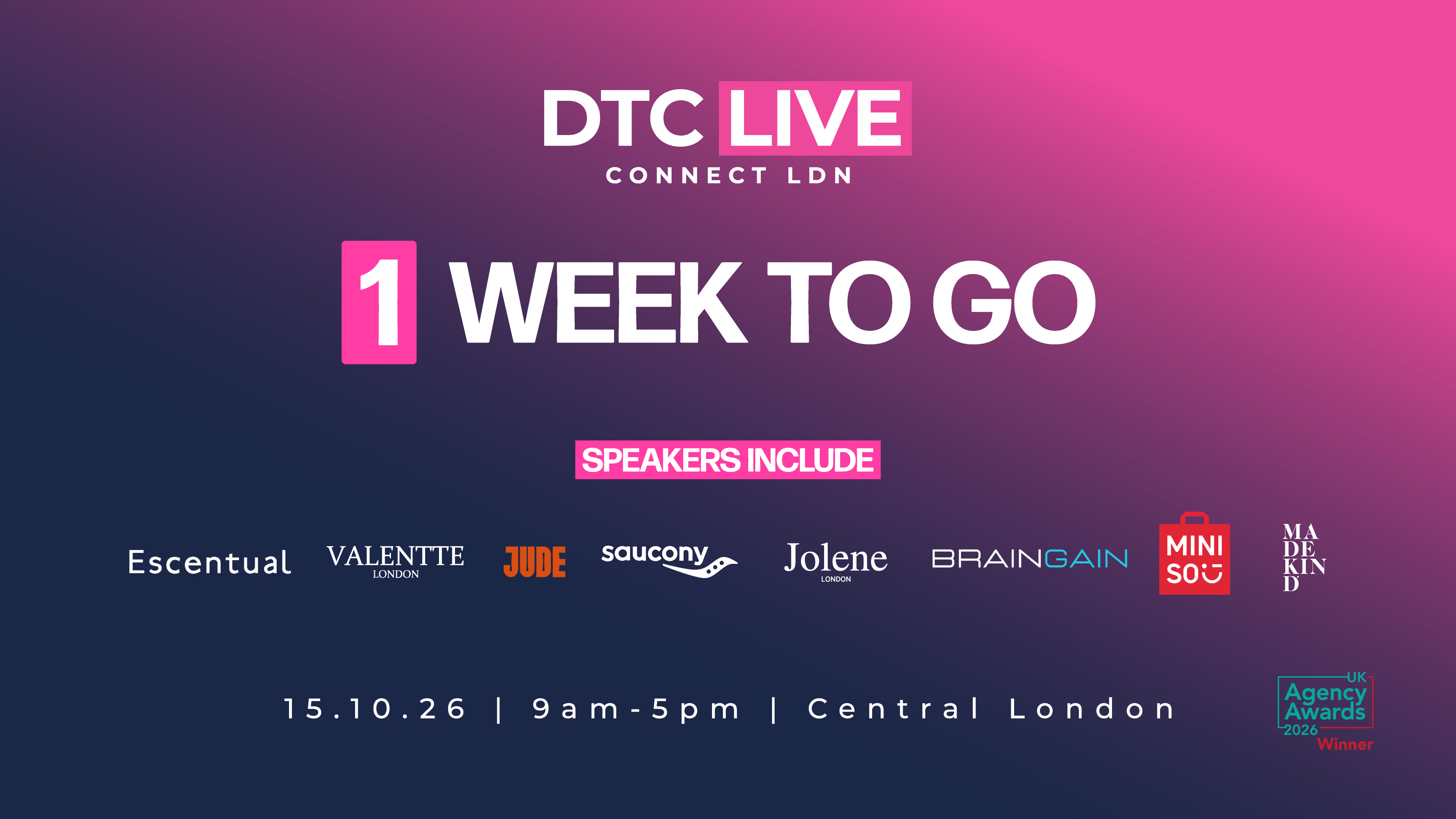
Before any of that, a quick heads-up: Connect LDN is next Thursday, and we're down to the last few seats.
Connect LDN: One Week to Go!
15th October 2026 | London | 9AM - 5PM
We are officially one week away from Connect LDN, and we only have a few complimentary seats left before we close registration.
We are bringing together a hand-picked group of founders and senior operators for an intensive day of strategy, specifically focused on navigating the complexities of Q4 and setting up for a profitable 2027.
Here is a reminder of what you get:
- Lightning Panels: Unfiltered strategies from leaders at Saucony, Escentual, Miniso UK, and more.
- Peer Networking: Connect directly with other ecommerce founders navigating the same bottlenecks.
- Premium Hospitality: Breakfast, lunch, and evening drinks are entirely on us.
Once these final tickets are gone, the guest list is locked. Grab yours here.
How to unlock Pinterest’s high-intent shoppers
A common trap is assuming all platforms function like a traditional social feed.
But Pinterest operates differently. It is not a social network, it is a visual search engine. Users arrive with active intent–they are planning a wedding, a wardrobe refresh, or a living room makeover.
They don't want to be interrupted, they want to be guided.
If you are looking to diversify your acquisition channels and capture a high-intent audience, here is how you need to adjust your mindset and strategy to win on the platform:
1. Understand the shift in demographics and intent
Recent data shows Gen Z is now the platform's fastest-growing cohort, making up 42% of the total user base. Crucially, these users are arriving with high commercial intent. Because they use the platform as a search engine to plan future purchases, over 96% of searches are unbranded.
You don't need to win a highly competitive branded keyword auction. You win by having high-quality, native-looking lifestyle imagery that perfectly answers their visual query. You aren't bidding against the category leader's brand terms, so the best answer to the search wins.
2. Adapt your creative to survive consideration
Traditional social ads are often designed for impulse, but Pinterest ads need to be designed for consideration. A loud, disruptive video that works on a fast-paced feed will feel jarring and out of place on a Pinterest board.
Users want to see the product in use. They respond to aspirational, lifestyle scenes, a styled bedroom or a well-lit kitchen. Additionally, Pinterest users expect and engage with text overlays on images. Put text on the image: dimensions, materials, a how-to step. On Meta that reads as clutter. Here it's the detail that moves someone from saving to buying.
3. Let Performance+ handle the heavy lifting
If you have previously found Pinterest Ads Manager clunky or time-consuming, the platform has made significant updates. Pinterest has made Performance+ campaigns their new standard for eCommerce, bundling AI-powered automation to handle bidding, budgets, and targeting.
Early data shows brands using it are seeing a 10%+ improvement in CPC and CPA compared to manual setups. Your job is no longer to micromanage the bids, it is to feed the system the best possible catalogue data and creative signals.
The Takeaway
Review your channel mix this week. If you are looking to expand your top-of-funnel reach, test a small slice of your budget on Pinterest.
You should be considering Pinterest ads if your product is something people plan for (home, fashion, beauty, weddings, gifting), your product catalogue is clean enough to feed Performance+, and you can produce lifestyle imagery and text overlays made for Pinterest, not resized from Meta.
Ask the brands in the community
If Pinterest is on your list, the quickest way to find out what it does for a brand your size is to ask one.
Our private Slack community, sponsored by Brightpearl, is where 120+ brands compare notes on exactly this: what they spent, what they'd skip, what was worth it.
Apply to join the DTC Live Slack
From the DTC Live Blog
Looking for more tactical advice this week? We have been busy breaking down the latest growth mechanics on the blog. Here is what founders are reading right now:
- The DTC Retention Playbook: Stop bleeding margin on one-time buyers. We break down the post-purchase flows and loyalty mechanics top brands are using to drive LTV this Q4.
- Navigating AI Search & Discovery: The discovery journey is fundamentally shifting. Here is how to ensure your product catalogue is technically structured to be found and recommended by AI models.
- Stripe & Stare’s £1M Email: How to raise capital on your own terms. Read how the founders bypassed traditional VC routes and raised £1 million directly from their own highly engaged community.
In Other News…
Gen Z trusts ChatGPT over Google for product research: In a Spreedly survey of 2,000 US adults, 31% of Gen Z named ChatGPT as their most trusted source for product research, against 12% for Google Search. Google still leads across all ages at 25%, and 34% of Gen Z said they'd drop a brand if an AI assistant kept finding better products for less.
What this means for you: ask ChatGPT the questions your customers ask and see whether you show up. If you don't, start with your product pages: clear specs, plain descriptions, real reviews.
Pinterest now scores your campaign setup: A new campaign optimisation score in Ads Manager rates each campaign on setup, creative mix and signal strength. Its recommendations all point the same way: adopt Performance+, go broad on targeting, add creative variations and keep budgets steady.
What this means for you: Pinterest hasn't published how the score is weighted, so use it as a setup checklist for a first campaign and keep judging results on CPA and ROAS.
The DTC Live Newsletter
Subscribe to get weekly eCom insights straight to your inbox.