Could your competitor use your exact product descriptions?

With AI, generating flawless, pleasant-sounding product copy is easier than ever. But sounding nice doesn't automatically mean it's persuasive, and relying on generic text might actually be a conversion killer.
Before we look at how to fix this and why generic copy forces you to compete on price, how does swapping your desk for some strategy work in the Spanish sun sound?
Gran Canaria Retreat: Trends, Tactics & Transformation
27th - 30th October, 2026 | Invite-Only
Sometimes, the breakthrough you need for your brand won't happen while you are staring at the same screen in the same office.
This October, we are heading to Gran Canaria with a small, hand-picked group of brands for our next Brand Retreat.
Here is what you need to know:
- Dates: October 27th - October 30th.
- Theme: Trends, Transformation & Tactics.
- Itinerary: A brilliant mix of focused workshops, deep-dive roundtable discussions, and wellness activities.
- Cost: Once your flights are booked, the entire retreat is fully expenses-paid.
You will have the space to unpack your biggest bottlenecks, share honest insights, and build genuine relationships.
We are down to our very last few seats. If you want to join us for a few days of sun, strategy, and incredible networking, we would love to have you.
Why your AI product descriptions aren't converting
A language model is essentially designed to predict the most probable next word. And probable often means average.
When you ask a model to write a product description, it leans on what the broader category uses: "premium materials," "designed for everyday life," or "effortless in any setting." It reads well because it sounds familiar. But familiar is rarely persuasive.
When your copy sounds just like everyone else in your category, your product page stops doing the heavy lifting. Buyers start shifting their focus to the differences they can easily observe: price and delivery speed. Competing on those two metrics usually means taking a hit on your margin.
Here is how to elevate your copy so it actually helps you sell:
1. Focus on specific facts, not vague claims
Saying a jacket is "warm" is a claim. Saying it is "tested to minus fifteen degrees" is a fact. Specifics build credibility precisely because they are falsifiable. Today's consumers have learned to easily tune out generic marketing claims, so replacing vague adjectives with concrete facts is often a strong conversion lever.
2. Address the hesitation directly
A lot of product copy is written for people who have already decided to buy. But the buyer at the margin is usually hesitating over a specific detail: fit, compatibility, durability, or what happens if the product doesn't work for their unique situation. Your copy earns its place on the page by resolving that specific doubt right at the point it surfaces.
3. Feed the model evidence, not just instructions
If you use AI to draft copy, try writing a brief instead of a simple prompt. Before generating anything, mine your last 50 reviews (starting with the honest three-star ones) and recent support tickets. Find the actual words your customers use.
Then, give the model a strict framework:
- State the one specific objection this page must answer.
- List three product facts that prove the answer.
- Provide the exact customer phrasing to reuse.
- Give it an explicit list of generic claims it is not allowed to make.
4. Treat copy as a testable variable
Copy is one of the few elements on a Shopify store you can change with zero engineering costs, yet it is rarely measured effectively. Single-SKU copy tests can sometimes be underpowered due to traffic limits. Instead, try testing a new objection-led copy structure across an entire category.
Monitor your "Add to Cart" rate (which responds quickly to copy changes) and revenue per session, keeping a close eye on your return rate as a guardrail.
The Takeaway
Run the "Swap Test" on your top ten SKUs this week. If the copy reads perfectly fine when placed under a competitor's product, it might be time to rewrite it around the unique objections that only your product can answer.
This week's deep dive was brought to you by Dayo Samuels, Rainy City Agency
Want to improve conversion before Q4? Book a quick call with Rainy City Agency.
Join the private network for brand operators
Building a brand behind a screen can feel incredibly isolating, especially heading into Q4.
That is why we built the DTC Live Slack community. It is a highly vetted, private network of 120+ scaling brands actively sharing honest advice, tech stack reviews, and real-time solutions.
If you are tired of navigating eCommerce growth on your own, this is a community exclusively for brands.
Apply to join the conversation.
In other news
UK economic growth to slow next year, OECD forecasts: The OECD has downgraded its UK growth forecast for 2027 to 1%, down from previous estimates, citing moderation in global growth and the ongoing drag of higher policy rates. Inflation is also predicted to remain stickier than hoped, taking longer to return to target levels.
What this means for you: With growth slowing and inflation lingering, consumer spending is unlikely to see a massive boom next year. Brands need to prioritise operational efficiency, ruthlessly protect their margins, and double down on retention strategies, as acquiring new customers in a tighter economic environment will only become more expensive.
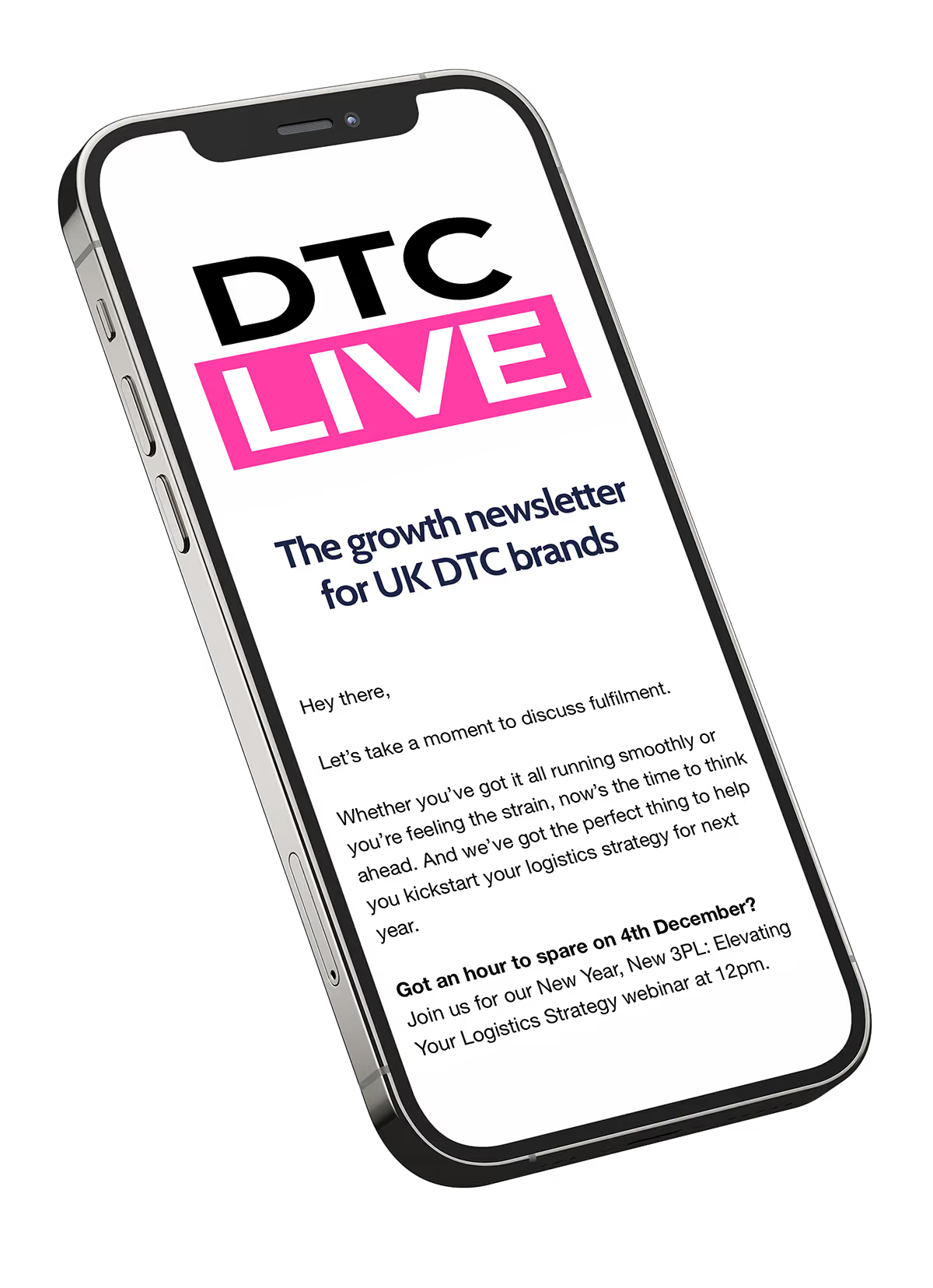
The DTC Live Newsletter
Subscribe to get weekly eCom insights straight to your inbox.