Are your customers treating subscriptions like one-time discounts?
But before that, here’s what our Connect LDN conference is covering on 15th October...
Connect LDN: What to expect
15th October 2026 | London
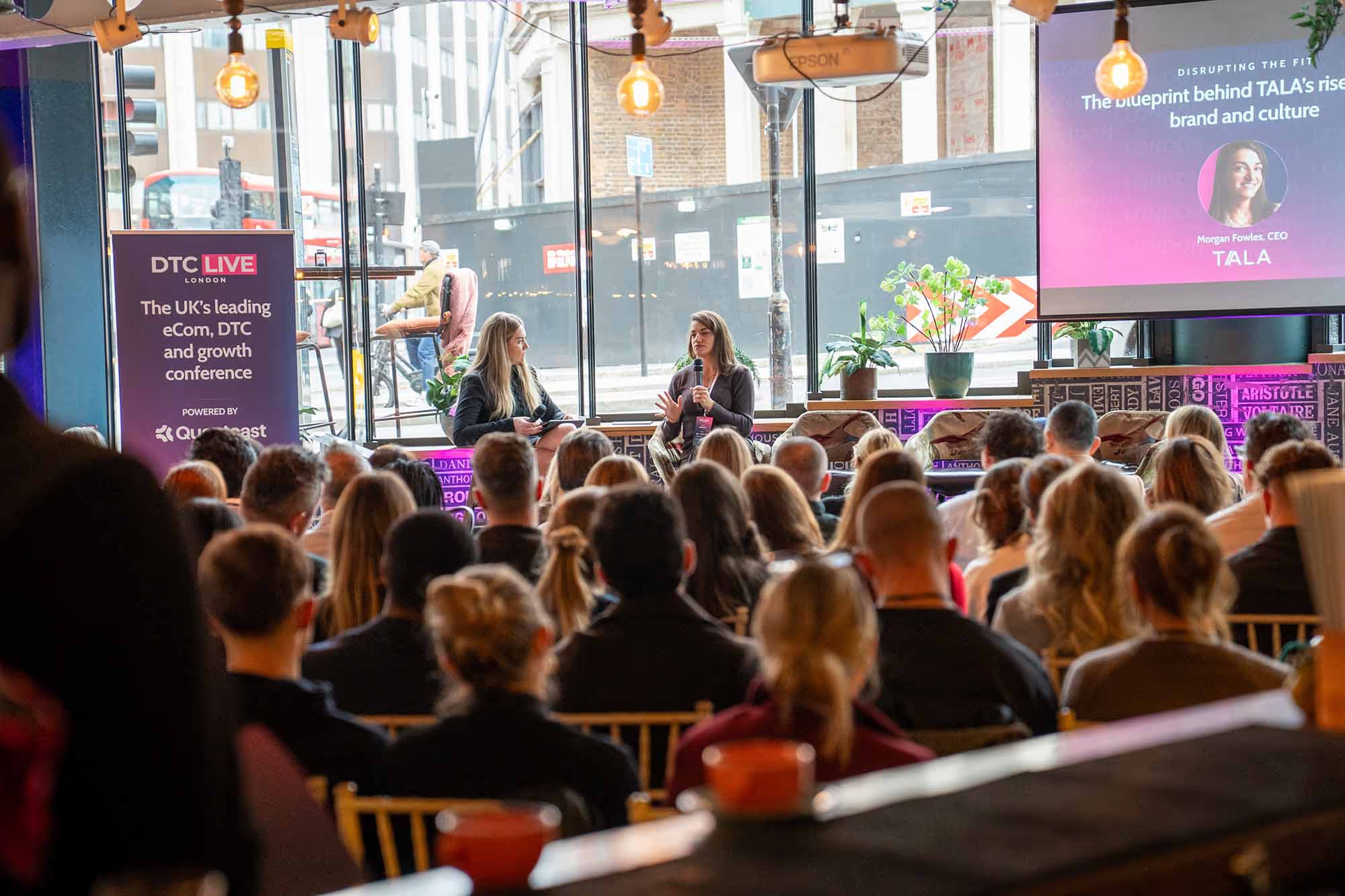
On October 15th, we’re coming to London for the last conference of the year, and we’ve got a lineup you won’t be able to say no to.
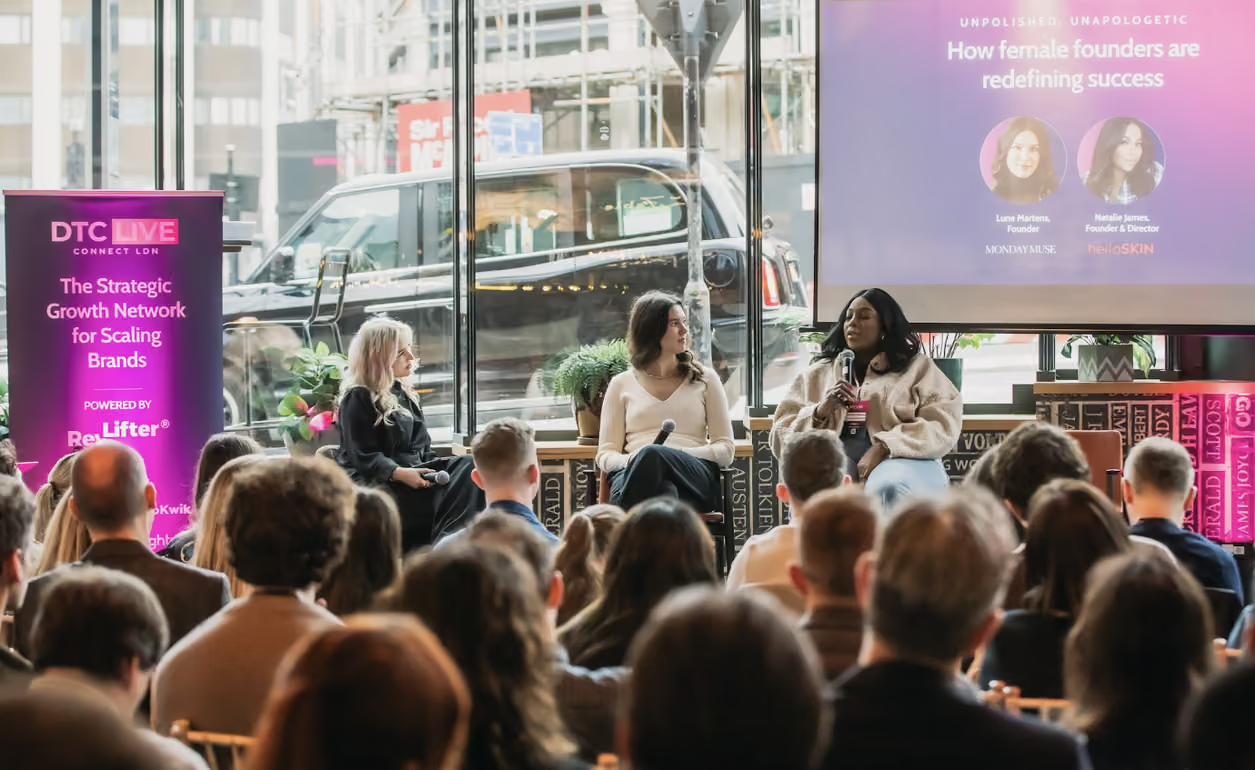
Connect LDN is an immersive day designed to get you out of the weeds and into a room with founders from across the country. We focus on direct, fast-paced panels and interactive networking to get you inspired and help you connect with the eCom scene in the UK.
Here is exactly what we are covering on the day:
We are breaking the agenda into focused sprints:
- Morning: The Pre-Purchase Journey. We sit down with Saucony and leaders from Miniso UK and Escentual to unpack exactly what is driving traffic and conversion right now.
- Afternoon: Post-Purchase Operations & The Money. Joined by founders and operators from JUDE, Pulse of Potential, Jolene, and Townhouse, we will talk openly about navigating supply chain bottlenecks, managing cash flow during peak seasons, and fixing friction in your retention strategies.
It is a free, highly curated day out of the office designed to help you gain clarity on your upcoming strategy.
Membership vs. Subscription: The psychology of charging to shop
During our previous years of Connect LDN, a recurring theme emerged from founders and operators at brands like Clothes Doctor, DECIEM, and Drinkwell UK: standard loyalty and 'Subscribe & Save' programs often teach customers to hunt for discounts rather than build true brand affinity.
When you offer a standard "Subscribe & Save" option, the customer's motivation is usually transactional. They are looking to get a specific item for the lowest possible price that day.
When you introduce a Paid Membership, you alter the psychological dynamic. Rather than incentivising them to buy a single product, you invite them to buy into your ecosystem.
Here is why some brands are beginning to test paid membership tiers to drive loyalty beyond the first sale:
1. Protecting the first-order margin
At the last Connect LDN, our panel with Nector, Clothes Doctor and IFGlobal unpacked why many standard loyalty programs fail to drive revenue. A common challenge with Subscribe & Save is the "subscribe, save, and cancel" loophole. You take a margin hit on the first order, assuming you will make it back later. If they churn in month two, you have essentially funded an unprofitable discount campaign. Paid memberships offer a different structure. By charging an upfront fee (e.g., £50 a year for free shipping and VIP perks), the customer funds the relationship on day one.
2. The "Sunk Cost" effect
When a customer pays a membership fee, they feel a natural inclination to "get their money's worth."
A prime example is Restoration Hardware (RH). By charging customers an annual fee for their Members Programme (which unlocks flat discounts and design services), RH shifted their model entirely. Today, a vast majority of their core business is driven by these paying members. The initial fee supports future loyalty because shopping elsewhere feels like wasting the membership they already bought.
3. Building a VIP moat beyond discounts
As discussed on a previous panel with DECIEM, true loyalty has to extend beyond just offering a percentage off. Standard subscriptions usually work well for highly commoditised, consumable goods.
If you sell fashion or homeware, a recurring product delivery makes less sense. Paid memberships allow non-consumable brands to generate recurring revenue by selling exclusive access, early product drops, and a permanent VIP status, just like Fabletics has done with their VIP tier.
The Takeaway
If your Subscribe & Save churn rate is climbing, it might indicate that your customers are seeking a discount rather than a true subscription.
It is worth reviewing your LTV data this week to see if a VIP membership model might serve your community better. Giving your most engaged customers the option to pay upfront for exclusivity can often support retention rates much more sustainably than an ongoing discount.
Is your peak plan built for growth, or just survival?
Every eCommerce brand wants a successful peak: more orders, higher revenue, and stronger customer loyalty. But when November arrives, the brands that perform best aren't the ones with the biggest marketing budgets or the most discounts. They are the ones that remove uncertainty before peak begins.
Peak doesn't usually create operational problems. It just exposes the ones that already exist.
Forecasting gaps become stock shortages. Limited warehouse capacity becomes delayed dispatch. Poor communication between marketing and operations makes disappointed customers.
With the average online cart abandonment rate sitting at around 70%, delivery concerns remain one of the biggest reasons shoppers hesitate at checkout. Once an order is placed, expectations only increase. Recent research found that 32% of consumers will stop buying from a brand they love because of inconsistent experiences, making reliable fulfilment just as important as securing the sale itself.
Visibility is your biggest competitive advantage
The strongest peak plans aren't built around stock alone. They are built around absolute visibility across the entire operation. That means having clear insight into:
- Upcoming marketing campaigns and promotions
- Warehouse capacity before offers go live
- Inventory levels across sales channels
- Carrier performance and delivery cut-offs
The brands that consistently deliver strong peak performance don't wait until October to ask whether they have enough capacity or if delivery cut-offs need reviewing. Those conversations happen early, giving teams time to test, adapt, and build contingency plans before they are needed.
The Takeaway: The strongest ecommerce brands treat operations as a core part of their growth strategy, not an afterthought.
At IFGlobal, we help brands build that operational confidence through better forecasting, capacity planning, and end-to-end fulfilment visibility, all supported by BladePRO, our Fulfilment Operating System. If you want to connect your marketing and operations for a smoother peak season, we should talk.
If you're reviewing your peak readiness, our Peak Freakout Survival Guide is full of practical advice and expert insights to help you prepare for the peak season.
In Other News…
School uniform sales drop as parents favour promotions and second-hand: Consumers increasingly prioritised value, driving a surge in promotional spending, and heavily utilising second-hand options.
What this means for you: Price sensitivity is at a peak, even for non-discretionary purchases. Brands that can seamlessly integrate pre-loved marketplaces, robust discounting strategies, or clear "value-for-money" messaging will capture the increasingly cautious consumer.
UK firms face climate revenue hit, Capgemini finds: A new Capgemini study reveals that 84% of UK organisations have seen climate change impact their revenue, yet only 5% have accurately quantified this financial risk.
What this means for you: If your entire supply chain relies on a single vulnerable region or material source, you are highly exposed to climate-related delays and price shocks. Brands are actively mapping these vulnerabilities now and diversifying their sourcing to protect margins before disruptions occur.
The DTC Live Newsletter
Subscribe to get weekly eCom insights straight to your inbox.